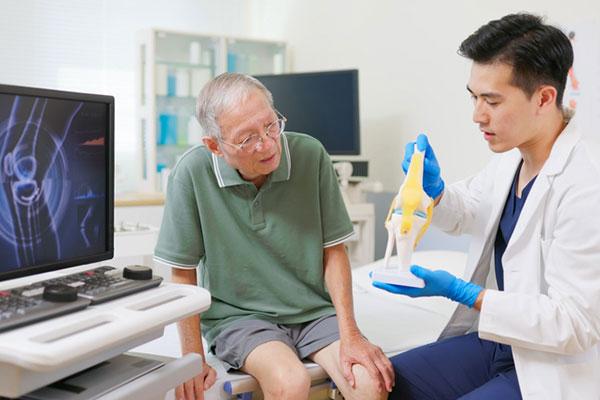
Comprehensive care for joint pain, arthritis and bone-health concerns, with a focus on mobility, function, fracture prevention and quality of life.
Assessment and management of bone-health concerns and fracture risk
Individualized care for pain, stiffness, movement and joint function
Exercise, rehabilitation and follow-up to support mobility and independence
Department-specific educational and procedure videos can be added here.

Arthritis refers to conditions that affect joints and may cause pain, stiffness, swelling or reduced movement. Osteoarthritis is one common form, while other types of arthritis have different causes and treatment needs.
Osteoporosis is a condition in which bones become less dense and more fragile, increasing fracture risk. Care may include clinical assessment, bone-density testing when appropriate, exercise, medicines and fracture prevention.
Assessment is individualized and investigations may be recommended when clinically appropriate.
Joint cartilage and surrounding structures can change over time, causing pain, stiffness and reduced function.
Reduced bone strength can increase the risk of fractures, particularly with falls or minor trauma.
Persistent pain, stiffness or reduced mobility may require evaluation to identify the underlying cause.
Treatment aims to reduce pain and improve day-to-day comfort and function.
Exercise, physiotherapy and appropriate treatment can help preserve movement, strength and independence.
Bone-health assessment and appropriate management can help reduce fracture risk in people at increased risk.
Assessment of pain, stiffness, mobility, medical history and fracture or fall risk.
Imaging, blood tests or bone-density assessment may be advised when clinically appropriate.
Treatment may include lifestyle measures, medicines, rehabilitation or specialist procedures as appropriate.
Ongoing review helps monitor symptoms, function, bone health and treatment response.
Recovery and ongoing management are individualized according to the condition and treatment plan.
Appropriate strengthening, flexibility, weight-bearing and balance activities may support musculoskeletal health.
When indicated, medicines and lifestyle measures are incorporated into an individualized care plan.
Regular follow-up can help assess symptoms, treatment response and ongoing bone or joint health needs.
Arthritis primarily affects joints and can cause pain and stiffness. Osteoporosis affects bone strength and increases fracture risk.
Many arthritis conditions can be managed with non-surgical measures such as exercise, physiotherapy, medicines and lifestyle changes. Treatment depends on the diagnosis.
Evaluation may include clinical assessment, fracture-risk assessment and bone-density testing when indicated.
Appropriate exercise can support strength, mobility and balance. The type and intensity should be suitable for the individual's condition.
For evaluation and discussion of treatment options, contact the Department of Orthopaedics at The Oxford Medical College, Hospital & Research Centre.
Contact Orthopaedics